

It is Tuesday morning and someone asks what Sunday’s sermon was about. You remember the preacher was on fire, and you remember writing something down. But the main point, the verse it stood on, and the thing you quietly promised God you would do about it have all gone silent. If you have ever wondered how to remember sermons past the church gate, you are in good company, and it does not make you a careless listener.
Forgetting is simply how the mind works when nothing interrupts it. What changes the outcome is not straining harder in the pew. It is what you do with the message in the hours and days after the benediction, which is exactly where Scripture puts the weight too.
So this post gives you five simple habits that carry a sermon from Sunday into the rest of your week. They take minutes, not hours, and they work whether you write in a paper notebook or on your phone.
If you want help with the notes themselves during the service, start with our guide on how to take better sermon notes. This post picks up where that one stops: the moment you walk out of the building.
Table of Contents
Why Sermons Fade Before Tuesday
In the 1880s, the German researcher Hermann Ebbinghaus memorized lists of nonsense syllables, relearned them after different delays, and charted how quickly his memory fell away. The forgetting curve he drew drops steeply at first and then levels off. In other words, most of the loss happens soon after learning, and what survives that first stretch tends to last.
That old finding has held up. In 2015, Jaap Murre and Joeri Dros repeated the experiment and reported results similar to Ebbinghaus’ original data in PLOS ONE. Their subject, like Ebbinghaus, learned syllable lists rather than sermons, so please do not treat the curve as a precise forecast of how much of Sunday you will keep.
But the shape will feel familiar to anyone who has sat in church for a while. The hours right after a message matter most, and a sermon you never return to has a short life.
A second line of research tells us what kind of returning helps. In a 2006 study, Henry Roediger and Jeffrey Karpicke had students read prose passages and then either reread them or practice recalling them without looking. On a test five minutes later, rereading won. On tests two days and one week later, the students who had practiced recalling remembered substantially more, even though the rereaders felt more confident.
So if you are asking how to remember sermons, the answer starts here. Rereading your notes feels productive, but pulling the message back out of your own head, before you look, is what helps it stay.
What Scripture Says About Hearing and Keeping
Long before anyone drew a forgetting curve, Jesus placed responsibility on the hearer. In Luke 8 He tells the parable of the sower, explains it to His disciples, and then adds a sober warning: “Take heed therefore how ye hear: for whosoever hath, to him shall be given” (Luke 8:18, KJV).
Notice what the good ground does in that same chapter. “But that on the good ground are they, which in an honest and good heart, having heard the word, keep it, and bring forth fruit with patience” (Luke 8:15, KJV). Hearing is the beginning. Keeping is what makes the difference, and fruit takes patience.
James puts it in a picture you cannot forget. A person who hears the word and does not do it “is like unto a man beholding his natural face in a glass: For he beholdeth himself, and goeth his way, and straightway forgetteth what manner of man he was” (James 1:23-24, KJV). James does not call that man wicked. He calls him forgetful, and the cure he offers is to keep looking and to continue in what he saw.
Hebrews adds a warning of its own: “Therefore we ought to give the more earnest heed to the things which we have heard, lest at any time we should let them slip” (Hebrews 2:1, KJV). The writer is urging believers not to drift from the great message of salvation, so the verse is bigger than note-taking. Still, the principle reaches every message you hear. What you do not hold with earnest attention will slowly slip.
How to Remember Sermons in the First Hour After Service
The first hour after church is the most valuable window you have, and it is usually spent on greetings, traffic and lunch. You do not need all of it. Two small habits, done in about ten minutes, will do more than an hour of rereading on Saturday.
Habit 1: Recall before you reread
Before you open your notes, ask yourself three questions. What was the main passage? What was the one big idea? What did the message ask me to do?
Answer them in the car, on the bus, or at the table, out loud or in a line or two of writing. Then open your notes and check what you missed. That small effort of reaching for the message is the same recall practice the research above describes, and it turns a passive Sunday into an active one.
Habit 2: Write one sentence and one step
At the top of your notes, write the whole message in one sentence in your own words. Then write one specific thing you will do this week because of it.
Make the step concrete enough that you will know whether you did it. “Be more prayerful” is a wish. “Pray Psalm 23 aloud before I leave the house on Tuesday and Thursday” is a step, and a step is something you can keep.
Monday to Saturday: Let the Message Follow You
A sermon is not meant to stay inside the hour it was preached. The habits below spread it lightly across the week, so the word you received on Sunday is still with you when Friday’s pressures arrive.
Habit 3: Search the Scriptures like the Bereans
When Paul preached in Berea, Luke records that the listeners “received the word with all readiness of mind, and searched the scriptures daily, whether those things were so” (Acts 17:11, KJV). They were eager and careful at once.
So on Monday or Tuesday, open the main passage and read the whole chapter around it, then look up the cross references the preacher mentioned. You are not checking up on your preacher to catch him out. You are letting Scripture confirm the word, which is how a message you heard becomes a truth you own.
Then give it some quiet. After the shepherds came to the manger, “Mary kept all these things, and pondered them in her heart” (Luke 2:19, KJV). Pondering is unhurried. Five minutes with the passage on Wednesday, turning one phrase over in prayer, is enough.
Habit 4: Talk about it with someone
Moses told Israel that God’s words “shall be in thine heart” and that they should “talk of them when thou sittest in thine house, and when thou walkest by the way, and when thou liest down, and when thou risest up” (Deuteronomy 6:6-7, KJV). The word was meant to live in ordinary conversation, not only in the assembly.
Teaching is one of the surest ways to remember. Share your one-sentence summary with your spouse over dinner, explain it simply to your children, or post it in your house fellowship group. Each time you put the message into your own words, you recall it again, and someone else gets fed too.
Practice the Message Before Next Sunday
Everything so far serves one goal: doing what the word says. James promises that the person who is “not a forgetful hearer, but a doer of the work, this man shall be blessed in his deed” (James 1:25, KJV). The blessing is attached to the doing, not to the hearing alone.
Habit 5: Do it, then review it on Saturday
Carry out the step you wrote on Sunday, even if imperfectly. Then on Saturday evening, before the next message arrives, read last week’s sentence and step one more time and ask yourself honestly whether you did it.
Write a short dated line under the note saying what happened, good or bad. That line is a quiet form of spiritual accountability, and it makes room for the next sermon instead of letting it bury the last one.
Keeping Years of Sermons Within Reach
Fifty-two Sundays come around every year, and many churches add a midweek service on top. That is a great deal of teaching. Part of how to remember sermons over the years is simply being able to find them again, because the problem is rarely that the notes were not taken.
So give every note a date, the preacher’s name, the main text and one or two tags for the series or theme. Months from now, when you are walking through a hard season, you will be able to search “forgiveness” or “Luke 8” and find exactly what you received. Our guide on how to organize sermon notes digitally walks through a simple filing system you can set up in an afternoon.
An organized archive also feeds the habits above. Recall is easier when last month’s sermon is a search away, and Saturday’s review takes seconds instead of a hunt through three notebooks.
Carry the Word Into the Week
Learning how to remember sermons is less about having a sharp memory and more about stewardship. The message was a gift, and a gift is meant to be kept, opened again and used.
So start small this Sunday. Before you look at your notes, recall the message in one sentence and write one step you will take. Then let the week do its work: search the passage, talk about it, do it, and review it on Saturday.
Carry Luke 8:15 with you as you go. The good ground is the heart that hears the word, keeps it, and brings forth fruit with patience. That can be you, one Sunday at a time.
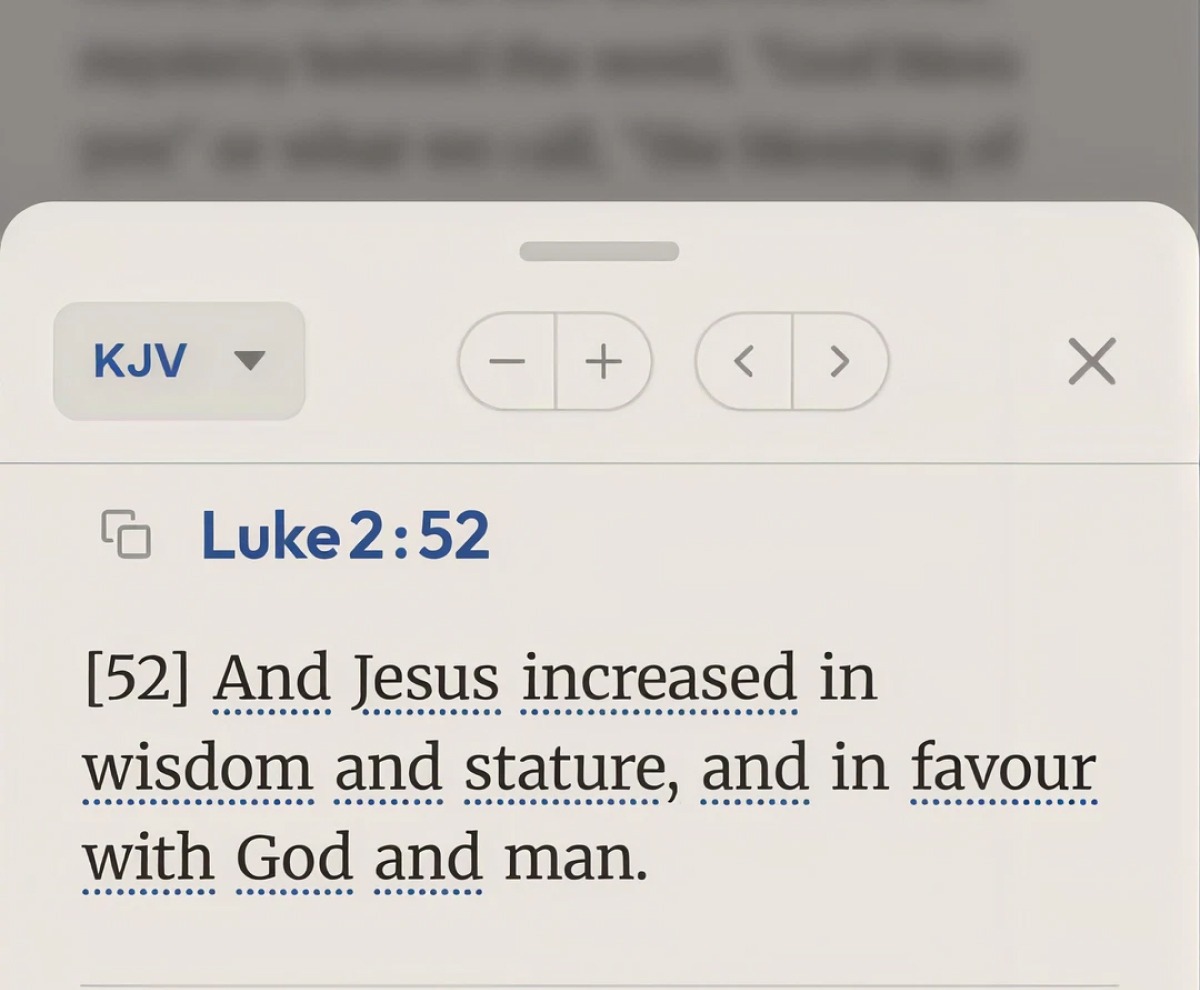
If it would help, you are welcome to try VerseTap. Type a reference like Luke 8:18 into a note and the passage appears, with five Bible translations built in that work offline. The core app is free, and your notes are never stored on VerseTap servers: they stay on your device and, if you turn on backup, in your own Google Drive. You can find it on Google Play and the App Store, or start at versetap.ng.
About the author
Simeon Taiwo Oluwafimijoba is a minister, church administrator, and Bible teacher, and the founder of VerseTap, a Bible study and sermon note-taking app built in Port Harcourt, Nigeria.
Download VerseTap
On Google Play, the App Store, or free on the web at versetap.app.
VerseTap app
Study deeper, even offline
Strong's Concordance, cross-references and five Bibles on your phone. Free to start.
Android · iPhone · Web