
Somewhere on November 1, someone opened a Bible app for the first time in months and read a chapter before breakfast. Maybe that someone was you. Global Bible Month is here, and around the world, people have said yes to reading God’s Word every day for 30 days.
Here is the quiet question nobody asks on day one. When the month ends on November 30, what will you still have? Thirty days of reading is a real gift. But if what God showed you on day 4 is gone by day 14, the month can pass like a good meal you cannot remember eating.
This post gives you a simple way to hold on to it: a few minutes after each reading, one small note, and a short look back every Sunday. Nothing complicated, and it works with whatever Bible app or reading plan you are using.
Table of Contents
What Is Global Bible Month and Who Is Behind It?
Global Bible Month is a November campaign led by YouVersion, the Bible app run by Life.Church, that brings churches, ministries, Bible societies, and publishers together around daily Scripture reading. At its center is the 30-Day Bible Challenge, which encourages people to read the Bible every day of the month, according to YouVersion’s October 6, 2026 announcement.
This is the second year. The 2026 edition runs from November 1 to 30, as Tech-ish reported. YouVersion also says it is taking Scripture into some of the world’s busiest public spaces this month, including Times Square in New York, Piccadilly Circus in London and the Dotonbori District in Osaka, Japan.
The first one, in November 2025, was no small thing. YouVersion reported in December 2025 that more than 2.6 million people took the challenge and that daily Bible use rose 19% compared with November 2024. Africa is part of the story too: Daily News Tanzania names partners across East Africa, among them the Bible Society of Kenya, ICC Nairobi and Mavuno Church.
Those are YouVersion’s own figures, so read them as a ministry reporting on its own work. Even so, the picture is plain and encouraging. Millions of people are opening the Word on purpose this month, and if you are one of them, you are in very good company.
Why Can 30 Days of Reading Still Leave You Empty-Handed?
Reading and keeping are not the same thing. You can read a passage with real attention, feel it land, close the app, and by lunchtime struggle to say which chapter it was. Nobody is to blame for that. It is simply what happens to memory when nothing is done to hold on to what came in.
Scripture never treats the Word as something to skim and move past. Jeremiah described it this way: “Thy words were found, and I did eat them; and thy word was unto me the joy and rejoicing of mine heart” (Jeremiah 15:16, KJV). Eating is slower than tasting. It takes something in and lets it become part of you.
There is a striking instruction in Deuteronomy for the kings of Israel. When a king took the throne, he was to “write him a copy of this law in a book,” and “it shall be with him, and he shall read therein all the days of his life” (Deuteronomy 17:18 to 19, KJV). Read in context, the goal was not a shelf of books. It was a king whose own hand had copied the Word, so that he would learn to fear the Lord and do what it said.
So the real risk of Global Bible Month is not that you will read too little. The risk is that you read a great deal and keep very little. A small written response each day is what changes that, because writing slows you down long enough for the Word to settle.
How to Keep What God Shows You During Global Bible Month
Here is the whole practice in one line: after each day’s reading, write one short note before you close your Bible. It does not need to be long. Three or four sentences are enough, and they answer three plain questions.
First, what did the passage say? Write the reference and one sentence in your own words, something like “Matthew 6:25 to 34: Jesus tells me not to worry about food and clothing, because my Father knows what I need.” Putting it in your own words is how you find out whether you really understood it.
Second, what did it show you? This is the line where the Word meets your life. Maybe a phrase stopped you, or a conviction pressed on you, or a comfort arrived that you badly needed that morning. Write it down plainly, as if no one else will ever read it, because no one else has to.
Third, what will you do? Name one small, honest step for today. Not a vow for the rest of your life, just today. James describes the person who acts on what they read as “a doer of the work,” and says that person “shall be blessed in his deed” (James 1:25, KJV).
Finally, date every note and keep them all in one place. That last part matters more than it looks. Notes scattered across a notebook, a chat with yourself and the margins of a printed plan are hard to gather on day 30, but one home for the whole month lets you read it back as a single story. If you would like more on the craft itself, our guide on how to take better sermon notes covers methods that work just as well for personal reading.
What Simple Weekly Rhythm Works for the Rest of November?
Daily notes give you material, and a weekly look back is what turns that material into something you keep. November 2026 has five Sundays, the 1st, 8th, 15th, 22nd and 29th, which gives Global Bible Month a natural rhythm.
On each Sunday, before or after church, read back through the week’s notes. It takes about ten minutes. Pick the one note that stood out most and copy its verse somewhere you will see it in the coming week. The psalmist said, “Thy word have I hid in mine heart, that I might not sin against thee” (Psalm 119:11, KJV). A weekly look back is one practical way of hiding it there on purpose.
Sundays also bring a second stream. The sermon you hear will often touch what you have been reading that week, so write a short note from the service too and keep it beside your reading notes. Our post on how to remember sermons has five habits for the days after Sunday that sit well with this rhythm.
Then on November 30, read the whole month in one sitting. Thirty short notes take less time to read than you would expect. Look for the thread running through them, because you will often find that God has been saying one thing to you in several different ways. Choose a single verse to carry into December and the Advent season.
Started late? You have not missed Global Bible Month. If today is your first day, begin today and keep going. The goal was never a perfect streak. It is a month in which the Word has a daily place in your life, and what God shows you does not quietly slip away.
Where Does VerseTap Fit Beside Your Reading Plan?
Many people will do Global Bible Month in the YouVersion Bible App, and that is a good place to do it. YouVersion is free, trusted around the world, and its reading plans make daily reading simple to start and easy to follow. VerseTap is not a replacement for it. YouVersion helps you read the Word. VerseTap helps you work with it and keep what God shows you.
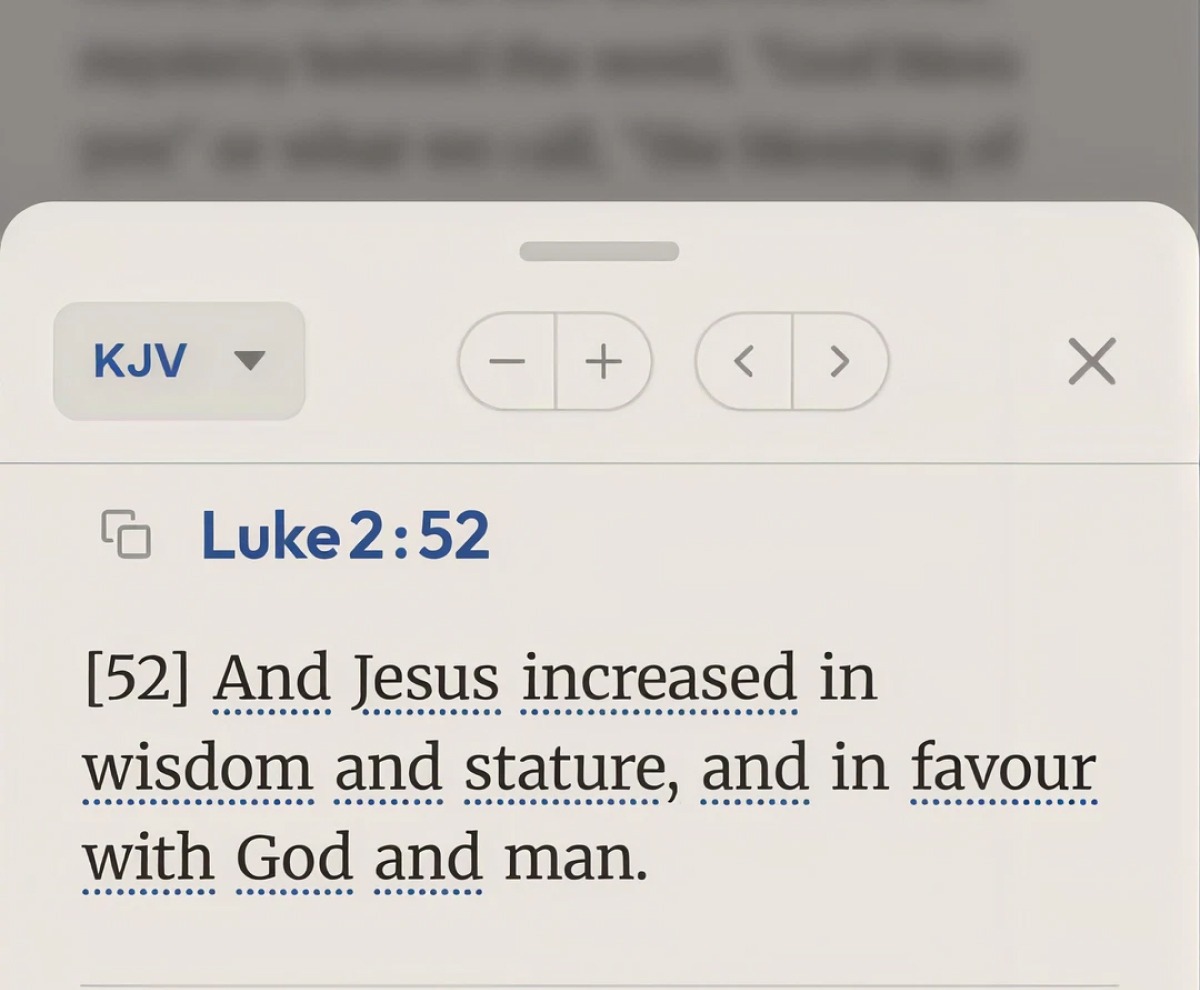
VerseTap is a Bible study and sermon note-taking app built in Port Harcourt, Nigeria. When you type a reference such as John 15:5 into a note, the passage appears right there, without leaving the note, from five Bible translations stored on your phone (KJV, ASV, WEB, YLT and BSB). That works offline, which helps on the days your data runs out halfway through the month. You can also tag every note “Bible Month” and pull up the whole set in seconds on November 30.
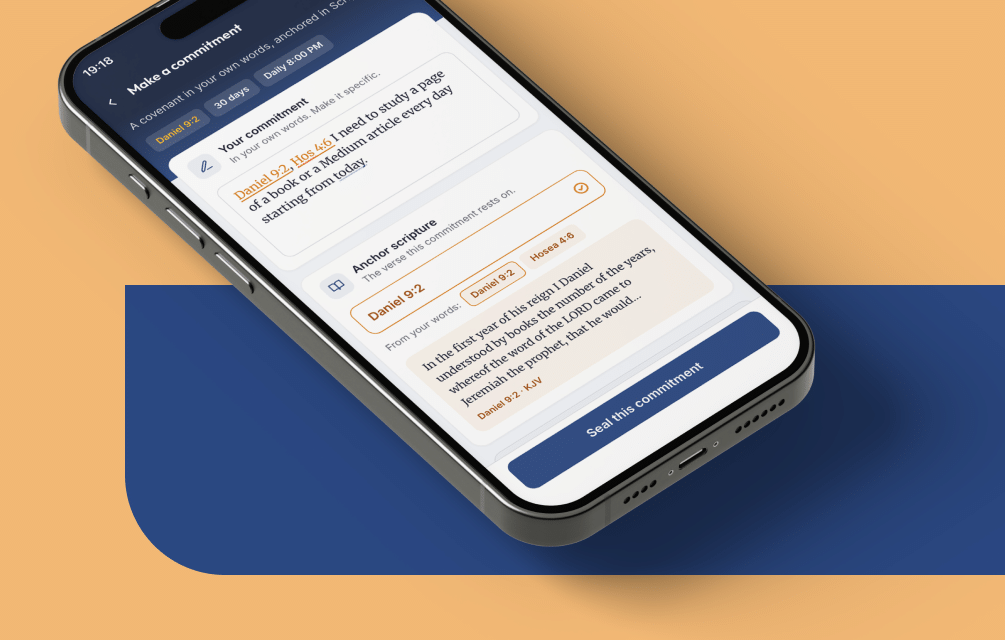
If you want help staying consistent, Scripture Commitment lets you commit to a 7 or 30 day discipline anchored to one verse, with a dated reflection for each day, so a 30 day commitment lines up neatly with Global Bible Month. You can see how it works in our post on the Bible reading accountability app, and why the written part matters in spiritual accountability and writing it down. Your notes are never stored on VerseTap servers. They stay on your device and, if you turn on backup, in your own Google Drive.
Make This the Month the Word Stays With You
Global Bible Month is a wonderful invitation, and millions of believers are answering it. You can answer it too, and you can come out of November with more than a finished plan. Read each day. Write one short note. Look back each Sunday. On the 30th, read the whole month and choose the verse you will carry forward.
Joshua was told that the book of the law should not depart out of his mouth, “but thou shalt meditate therein day and night, that thou mayest observe to do according to all that is written therein” (Joshua 1:8, KJV). Meditating and doing belong together. A few written lines each day are a simple way to practice both.
If it would help, you are welcome to try VerseTap alongside your reading plan. The core app is free, it works offline, and your notes stay yours. You can find it on Google Play and the App Store, or start at versetap.ng. Whatever you use, keep reading, keep writing, and let this be the month the Word stays with you.
Simeon Taiwo Oluwafimijoba is a minister, church administrator, and Bible teacher, and the founder of VerseTap, a Bible study and sermon note-taking app built in Port Harcourt, Nigeria.
Download VerseTap
On Google Play, the App Store, or free on the web at versetap.app.
VerseTap app
Study deeper, even offline
Strong's Concordance, cross-references and five Bibles on your phone. Free to start.
Android · iPhone · Web